
Health Insurance in the U.S. for Newcomers
A newcomer-friendly introduction to how U.S. health coverage works and what to understand before choosing a plan.
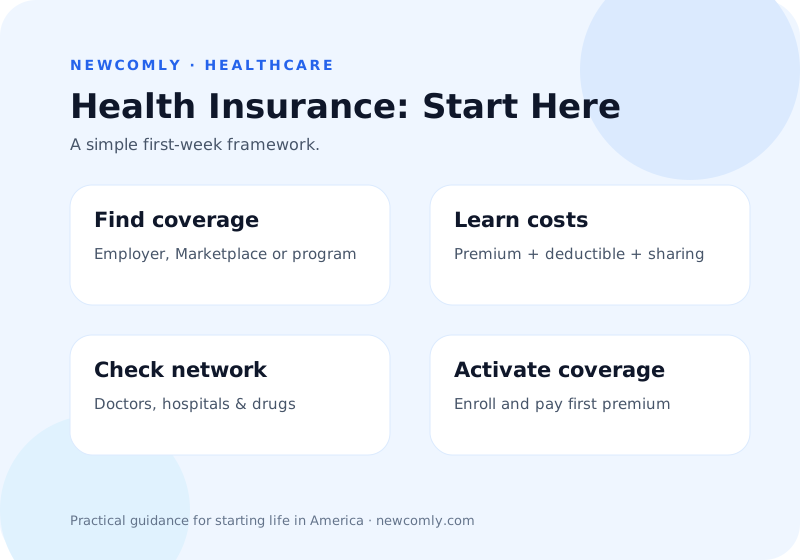
Most people should start by identifying where coverage may come from—an employer, the Health Insurance Marketplace, Medicaid/CHIP if eligible, or another qualifying source—then compare total costs and provider networks, not just the monthly premium.
Why U.S. health insurance feels complicated
In the United States, the amount you pay each month is only one part of the cost. A plan can also include a deductible, copayments, coinsurance, and an annual out-of-pocket maximum. The doctors and hospitals you can use may depend on the plan network.
Where newcomers may get coverage
- Employer coverage: Many workers are offered health benefits through a job.
- Health Insurance Marketplace: Eligible people can compare individual and family plans and may qualify for savings based on household information.
- Medicaid or CHIP: Eligibility depends on state rules, income, household circumstances, and immigration-related rules.
- Other coverage: Some people may qualify through a spouse, parent, school, Medicare, or another program.
Five terms to learn first
| Term | Plain-language meaning |
|---|---|
| Premium | The amount you pay for coverage, usually every month. |
| Deductible | What you may pay for covered services before the plan begins paying for many services. |
| Copay | A fixed amount for certain covered services. |
| Coinsurance | A percentage of a covered cost you pay under the plan terms. |
| Network | The doctors, hospitals, pharmacies, and other providers contracted with the plan. |
A practical first-week checklist
- Check whether an employer or family member offers coverage.
- If not, check your state Marketplace or HealthCare.gov pathway.
- Gather household and income information before applying.
- Compare total yearly cost estimates and provider networks.
- After enrolling, pay the first premium directly to the insurance company so coverage can take effect.
CHOOSING COVERAGE
Compare plans with one realistic year, not one monthly premium
Imagine a year with routine visits, several prescriptions and one unexpected urgent-care visit. Then compare the premium, deductible, copays or coinsurance, network and out-of-pocket maximum together. This makes it easier to see why the lowest monthly premium is not automatically the lowest-cost choice.
| Your situation | First place to check | Key question |
|---|---|---|
| New U.S. job | Employer benefits | When does coverage start, and what does family coverage cost? |
| Joining spouse/parent | Their employer plan | Does your event open a dependent enrollment window? |
| Student | School/student health plan | Can it be waived, and what local care is in network? |
| Moved from abroad | Marketplace | Does the move create a Special Enrollment opportunity for you? |
Before clicking “Enroll”
- Search the provider directory for nearby primary care, urgent care and hospitals.
- Check your regular medications on the plan formulary if applicable.
- Understand when coverage actually begins.
- Save confirmation numbers, plan documents and premium receipts.
Official sources
- HealthCare.gov — Getting Marketplace Health InsuranceExternal site ↗
- HealthCare.gov — PremiumExternal site ↗
- HealthCare.gov — DeductibleExternal site ↗
This article provides general educational information, not individualized medical, legal, tax, immigration, or insurance advice. Coverage rules and plan terms can change. Verify current requirements with the relevant government agency, insurer, employer, or qualified professional.
Health insurance for newcomers: choose the coverage source first, then choose the plan
High-performing health-insurance guides usually explain premiums and deductibles. Newcomers often need a step before that: identify where you can realistically obtain coverage and when you are allowed to enroll. Depending on your situation, the starting point may be an employer, a spouse/parent plan, the Marketplace, a student plan, Medicaid/CHIP if eligible, or another source.
Step 1: identify your enrollment door
| Situation | First place to check |
|---|---|
| New U.S. job | Employer benefits: eligibility date, enrollment deadline, employee + family premium. |
| Joining a spouse/parent | Dependent enrollment rules and qualifying-life-event deadline. |
| Recently moved from another country | Marketplace Special Enrollment Period and immigration-status eligibility. |
| International student | School health plan, waiver rules, and Marketplace eligibility if applicable. |
| Lower-income household | Marketplace application plus Medicaid/CHIP screening under your state’s rules. |
Step 2: compare one realistic year—not one monthly premium
Estimate twelve months of premiums, then add what you might spend before the deductible, typical copays/coinsurance, prescriptions, and a realistic larger medical event. The cheapest premium can be expensive if the deductible is high or your doctors and medicines are out of network.
Step 3: verify the network before enrolling
- Search the insurer’s current provider directory.
- Call the doctor or clinic and verify the exact plan/network name—not merely the insurance company.
- Check nearby urgent care and hospital options.
- Review the formulary for medicines you take regularly.
After enrollment, coverage may not start until you pay
Do not assume an enrollment confirmation alone means coverage is active. Follow the insurer’s instructions for the first premium, save confirmation numbers, and verify the effective date before a non-emergency appointment.
Research approach: this guide uses the questions common in major consumer health explainers—cost, deductible, network, prescriptions—and adds newcomer-specific enrollment paths. Current eligibility statements are anchored to HealthCare.gov rather than copied from secondary blogs.
Health insurance for newcomers: what to verify before choosing a path
Compare total yearly cost, not just the premium
HealthCare.gov recommends comparing premiums together with deductibles, copayments or coinsurance, and the out-of-pocket maximum. A lower monthly premium does not necessarily mean lower total cost for your household.
After enrollment
Confirm the plan’s effective date, follow the insurer’s instructions for the first premium, save your member information, and verify the provider network before non-emergency care when practical.
Sources checked
- Government HealthCare.gov — Marketplace eligibilityExternal site ↗
- Government HealthCare.gov — Health coverage for immigrantsExternal site ↗
- Government HealthCare.gov — Total costs: premium, deductible & out-of-pocketExternal site ↗
NEWCOMLY COMMUNITY
Questions & newcomer experiences
Ask a practical question, share what worked for you, or suggest a correction. Every submission is reviewed before it appears publicly.
Community notes
No public questions or experiences yet. You can be the first to contribute.